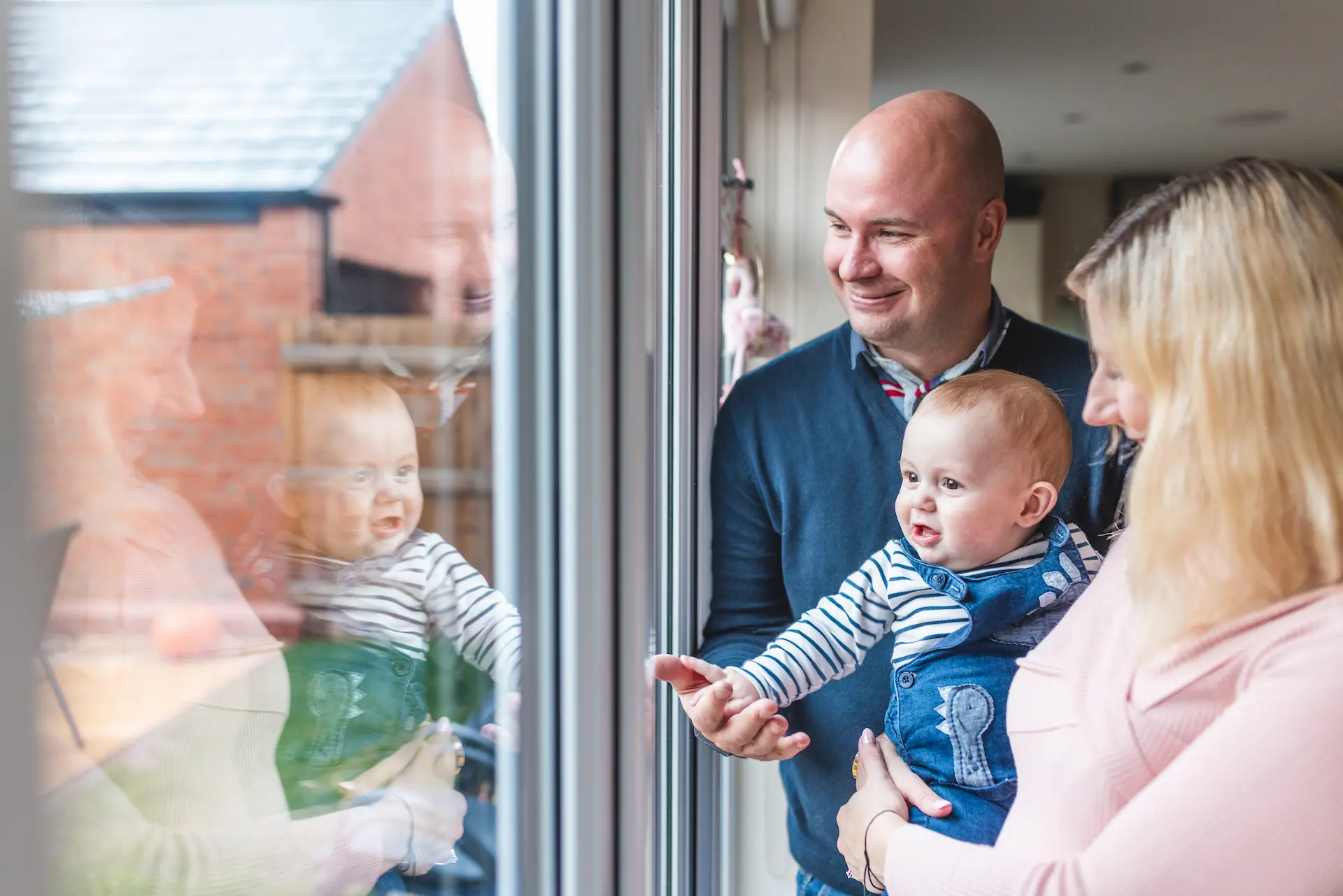

Selling off-plan starts long before the sales launch. Before anyone walks through a front door, they’re deciding whether they can see their life there.
Off-plan buyers are buying an idea
Walk into most marketing suites and you’ll find the same things: a site plan on the wall, a spec sheet on the desk, and CGIs of sunlit kitchens with nobody in them. Developers spend millions designing and building homes, and the marketing does a careful job of showing what’s being built.
An off-plan buyer can’t touch any of it. There’s no kitchen to stand in, no street to walk down, no neighbour to wave at. What they’re committing to is an idea of what life could be like once the scaffolding comes down — and for most people, it’s the biggest purchase they’ll ever make.
Specifications, floorplans and amenities matter. They answer the practical questions and give buyers something to compare. But they don’t help someone picture a Saturday morning there, or the walk to school, or the first time friends come round.
Confidence comes before the reservation
Buying a home that doesn’t exist yet asks people to trust a developer with a promise. The specification tells them what they’ll get. The feeling tells them whether they’ll belong.
That feeling is built long before the sales appointment. It starts with the first advert someone scrolls past, carries on through the website and the brochure, and is tested the moment they arrive on site. Buyers who can already picture themselves living there turn up with fewer doubts, and the conversation moves faster from “should we?” to “which plot?”.
Start with the people who’ll live there
The developments that sell well know who they’re for before they decide what to say. That means going further than age bands and price brackets. What’s prompting the move? What are people leaving behind, and what are they hoping to find?
A couple downsizing after the kids have left and a young family outgrowing a terrace might both look at the same three-bed. They’ll want very different things from it, and they’ll respond to very different stories about the place.
Answer those questions properly and they shape everything that follows: the development’s name and positioning, its identity, how the show home is dressed, what the sales team talks about first, and how buyers are looked after between reservation and getting the keys.
A sense of place is harder to undercut than a price
When every development nearby offers similar homes at similar prices, the conversation drifts towards incentives. Stamp duty paid, flooring included, upgrades thrown in. Incentives eat into margin, and a competitor can match them by Monday.
A distinctive sense of place is much harder to copy. We believe people give places meaning, and places shape how people feel. When a development has a clear character of its own, buyers choose it for what it is, and the developer has more room to hold price.
What that looked like for Bargate
When we worked with Bargate Homes, we rebuilt their identity around one idea: the feeling of home. Every part of the brand was shaped to speak to what it’s like to live in a Bargate home, so buyers could feel it before they’d ever set foot on a site.
Between May and October 2025, enquiries increased by 10.9% and branded clicks rose by 30% compared with the previous six months. More people were searching for Bargate by name — a strong signal of growing brand awareness and interest.
Building desire is part of the build
Developers put enormous thought into the homes they create. The design, the layout, the materials, the landscaping. Every detail is considered to make the finished development somewhere people want to live.
But the experience of a place begins long before anyone moves in.
From the first glimpse of a development to the moment someone picks up their keys, every interaction is an opportunity to build confidence, create connection and help buyers imagine a life there.
That’s why brand shouldn’t be something that’s added when a development is ready to sell. It should be shaping how that development is presented, experienced and understood from the outset.
Because when you’re selling a home that doesn’t exist yet, what people feel about it matters just as much as what you’re building.
Is your development giving people something to feel?
Our feel.forward™ diagnostic explores how effectively your brand connects with prospective buyers, and where there may be opportunities to build stronger interest, confidence and desire.