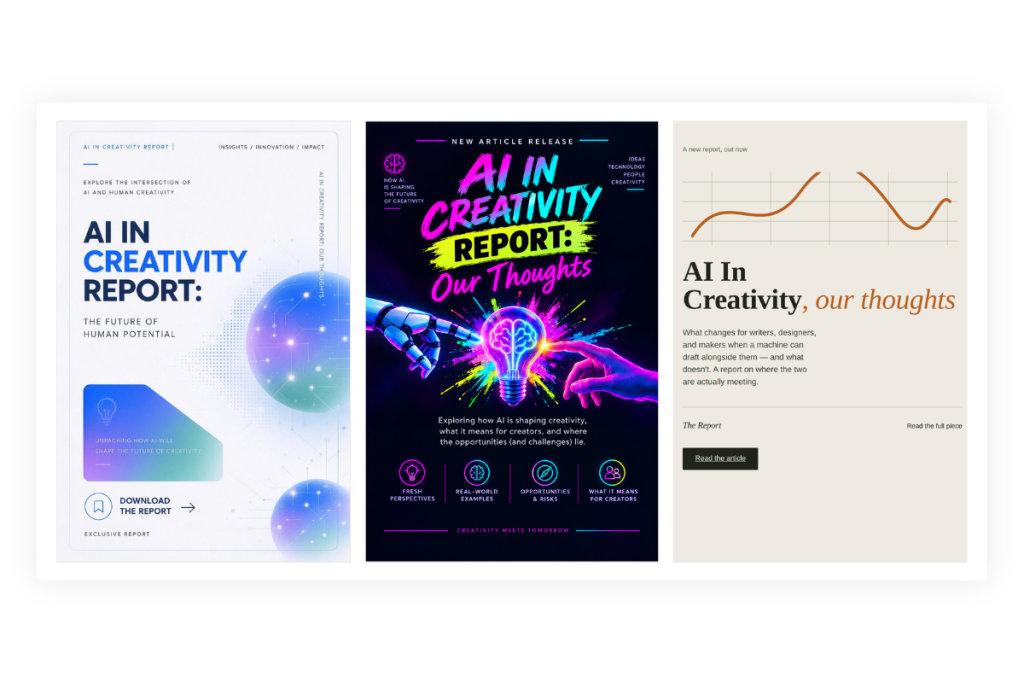
D&AD is a global not-for-profit organisation that promotes and celebrates creative excellence in design and advertising. They collected the opinions of over 197 people in the industry who are actively involved in creative decisions around AI. The report covers 60 cities in 30 countries to give us the most comprehensive review of the impact of AI on creativity in 2026.
At The Escape, we care deeply about the creative world we operate in. Our team stay up to date with all the latest announcements, and this report stood out to us as something we all feel strongly about. Creativity is inherently subjective, but the way ideas are formed and how campaigns are materialised are key to creating truly great work that connects people with brands.
The Key Insights
We recommend you download and read the report in full, but here are some of the highlights:
- AI makes work faster, cheaper and easier to polish – but it can’t judge the work creatively.
- AI gives everybody the same answers, exactly as it was built to do
- Agency fees remain unchanged, raising the question of what clients pay for if it’s not time?
- AI is best paired with real human experience for creative excellence
- Juniors are being shut out of the industry, with worries about senior talent shortages in the future
- Most organisations do not have adequate ethics and security policies for safe AI use
- AI tools are being rolled out at an alarming rate by Leadership teams who have never used them, with no guidance or support, just expectation.

Our creative perspective
Tara is our Head of Creative at The Escape; our bastion of all things creative and brand. Working on brand identities, developing campaign concepts and ideating creative concepts are where she comes alive. The advent of AI has shifted how she leads the creative process, keeping human ideation at the heart of everything.
AI isn’t the creative
We’ve spent a lot of time at The Escape figuring out where AI genuinely helps… and where it absolutely shouldn’t.
Yes, AI makes SOME things faster, BUT the danger is it making the thinking optional.
The messy bit. The bad ideas that lead to better ones. The cultural understanding. The “why this, not that?” That’s where creatives learn to think. And that’s the bit I don’t think we can afford to lose.
Everything is the same
AI will undoubtedly level the playing field. Smaller businesses and start-ups can now create, test and explore things that would previously have been out of reach. But when everyone has access to the same tools and prompts, the outputs inevitably start to converge.
Same-same is the enemy of brands.
Which is why I think specialist creative talent becomes more valuable, not less. The role of the creative isn’t disappearing. It’s evolving. We need to know when to use AI and when not to.
Humans should lead creative ideation
And, most importantly, what should exist in the first place.
We’re constantly experimenting with where AI fits into our process. But the fundamentals haven’t changed: The idea, the rationale, the human insight, the point of view.
So yes, AI can help you get there quicker. But, you shouldn’t listen when it tells you where you should go! That’s yours to make.
Looking forward
The future isn’t going to belong to the people who can make the most stuff. AI has already made that race pretty pointless. It’ll belong to the people who know what’s worth making.
When everyone can generate a film, a campaign, an identity, a hundred routes or a thousand images in seconds, the output becomes cheap. Judgement becomes expensive.
So I think the creative industry gets smaller in some places and more valuable in others.
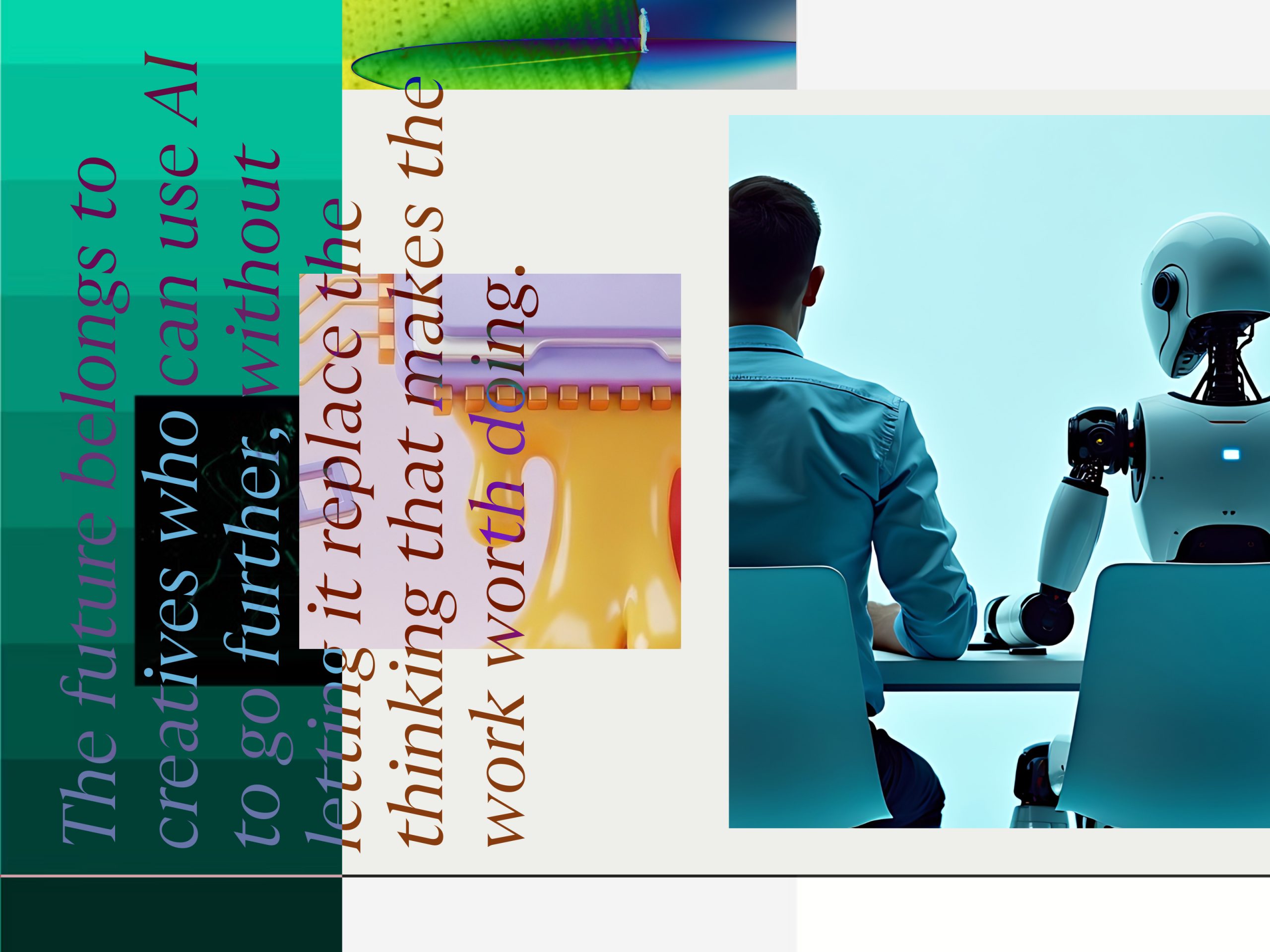
Less production. More thinking. Less execution. More direction. The future belongs to creatives who can use AI to go further, without letting it replace the thinking that makes the work worth doing.
Our performance perspective
Kerri is our Head of Performance Marketing at The Escape; she’s a creative at heart who spends her days in spreadsheets, crawlers & analytics. She’s been working to understand more about how these generative AI tools work to improve brand visibility and citations.

I think the findings are incredibly interesting, not just for creatives but for all teams utilising AI. I’m thankful for D&AD’s report, as most of the issues raised have been concerns since the advent of AI a few years ago.
Speed doesn’t mean quality
I’m all in favour of making lives easier, improving processes and speeding up the mundane work. I personally draw the line at creating via AI. The issue of all AI output being the same is so true; I’ve seen countless AI-generated articles all written the same way, with the same ‘expert’ insight and the same solutions. On LinkedIn, I’ve seen countless examples of these articles’ incredible rise to high rankings with huge traffic gains, only to immediately flatline shortly afterwards. The stuff of all SEO experts’ nightmares.
Only people with experience writing article content or page recommendations can see through the AI-generated content. We see what’s helpful, what’s obvious, what’s unique and what’s missing for both search engines, AI tools themselves and most importantly, users. Google repeats what it wants from us every time there’s an update: helpful, reliable, original and useful content. Creating the same thing as everybody else won’t cut it digitally or creatively.
The real risk of fewer Junior positions
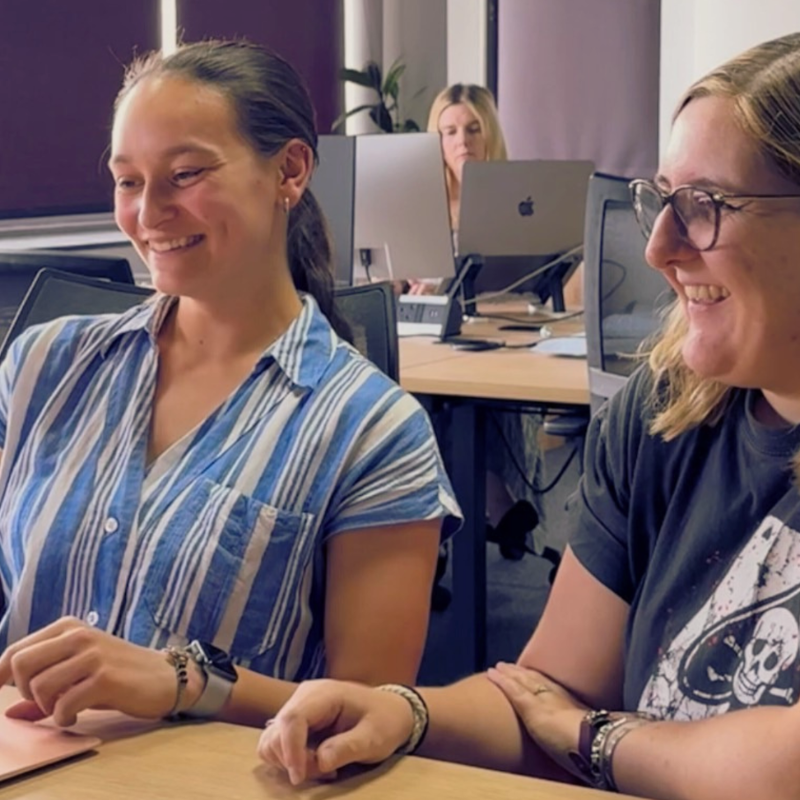
I worry about the deficit of Juniors in the industry as a whole. Performance alongside creative teams will also be heavily impacted by a lack of future senior talent. I’m concerned that the Juniors that come through will be incredibly good at asking for things, but not very good at judging the quality of what they receive. Because they’ve not had the real experiences needed to learn this skill.
We need people to experience the ‘grunt’ work for themselves. The annoying research, never-ending testing and panicking when things inevitably go wrong. It’s important they face all those challenges we all learnt from to truly understand the industry we’re in. Failure is just as, if not more, important as success to becoming great at what you do!
The ethical considerations
Ethically, AI throws up a huge number of issues for me, not only in terms of accuracy and compliance, but of intellectual rights and, more importantly, ecological impact on the world. Global warming is real, and building huge electricity and water-guzzling data centres may not be in our best interest as inhabitants of Earth. I believe wasteful use of AI should be restricted in the workplace, and requests that require high usage should come with a warning from the tools about whether to proceed with the request.
Looking forward
I think the industry is already realising the impact of the rapid adoption of AI tools and will start to shift in the right direction to address the issues. I predict that large agencies will roll out junior training programmes that veto AI use until the basics are covered. Alongside this, I think they will be building out non-AI teams, working in tandem with AI users, who focus on traditional creative strategies to cover all grounds of creative thinking.
EU & UK law will catch up on AI policy, some of which we’ve seen in the last few months with Article 50’s watermarking and disclosure requirements for AI-generated content and chatbots. I believe that once the AI market growth starts to stagnate, policies around ethical use and global warming will then be considered and enacted.
Agencies themselves will face a reckoning on how work is sold and delivered, with new, interesting solutions that move away from time-based quoting we’ve all been used to. Quality is going to be key, not just to win business as an agency, but to deliver good and meaningful work for our clients.
The future is changing
Creativity is always shifting to appeal to the ever-changing needs of the audience. Creative work is now accessible to more people than ever, but it’s important to remember that great creative work is driven by the human need for connection. Humans understand each other in ways machines, tools, and artificial intelligence could never process.
At The Escape, we’re excited for the future, and all the interesting new ways we can use creative marketing to emotionally connect people with brands. Discover how your customers feel about your brand, and unlock the path to aligning that feeling today.
What else has got us talking?
The home of secure global logistics